
Paver Installation in Burbank, Chicago, Illinois & surrounding areas
Paver Surfaces Designed to Stay Level and Beautiful
Paver surfaces fail for one reason almost every time. It is never the pavers themselves. It is the base underneath them. Pavers tolerate normal soil movement from Illinois freeze-thaw cycles well. But only when the base was excavated to the right depth. Filled with the right aggregate. Compacted in the correct lifts. Quality Roofing & Exteriors has been installing paver systems long enough to understand what that preparation actually requires. Base preparation is the work that determines the outcome. Whether a surface looks the same in year 15 as it did in year comes down entirely to what happened underground. Our process reflects that understanding on every project we take on.
Paver installations in Illinois face serious freeze-thaw soil dynamics. Every exterior surface in this climate does. Frost penetration depths in Illinois are not shallow. Base excavation must reach below the seasonal frost zone. That is the only way installations stay stable without annual releveling. We serve residential and commercial property owners throughout Burbank, Chicago, Illinois & surrounding areas as our primary paver market. Our project work extends across Chicago, Illinois and surrounding Cook County communities. Soil conditions and freeze-thaw depth requirements vary across those markets. We account for both on every job we take on.
Quality Roofing & Exteriors
is licensed, bonded, and insured across every paver material and application we handle. With 45
years of exterior hardscape experience in this region, we bring base preparation knowledge, material familiarity, and installation discipline that Illinois paver systems specifically require. Every project is managed by our own trained crews from excavation through final joint sanding and edge restraint installation. Visit our contact page when you are ready to discuss your project.
Paver Systems We Install for Every Property Type
Concrete Paver Driveway Installation
Concrete pavers distribute vehicle loads through unit interlock rather than beam strength. We install driveway paver systems on aggregate base depths adequate for Illinois frost conditions and vehicle loads, with edge restraints that prevent lateral spread under regular traffic loading.
Natural Stone Paver Installation
Natural stone pavers require individual assessment due to dimensional variation between units. We place bluestone, limestone, travertine, and granite with consistent bed thickness, correct joint width, and surface plane alignment that produces a smooth, level finished surface free of tripping hazards.
Brick Paver Patio and Walkway Installation
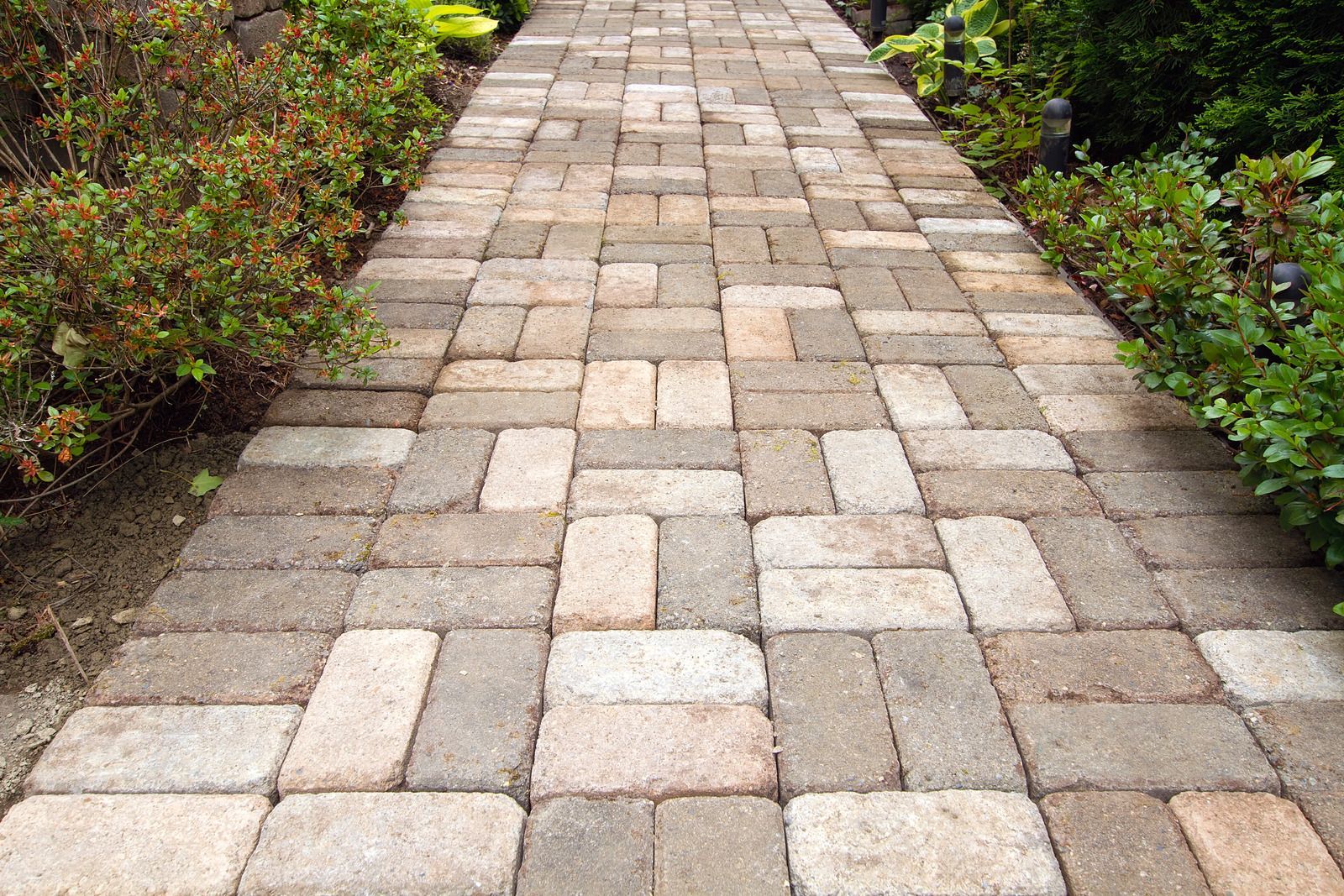
Brick pavers age gracefully when installed over properly prepared base material. We lay them in the specified pattern with consistent joint spacing, set in a sand bed over compacted aggregate, and finished with polymeric sand that locks units and resists weed penetration.
Pool Surround and Spa Area Paver Installation
Pool surround installations require drainage slope away from the pool edge, slip-resistant paver selection for wet foot traffic, and base preparation that accounts for moisture from splashing and deck washing. We design every pool surround system with those drainage and safety requirements in mind.
Paver Repair and Releveling
Settled paver areas without base failure can often be releveled by lifting affected units, correcting the sand bed, and resetting without disturbing surrounding pavers. We assess whether settlement stems from sand migration or base movement before recommending scope, since treating the wrong cause leads to repeat failure.
Permeable Paver Systems
Permeable paver systems use open-jointed units over clean aggregate that allows stormwater to infiltrate rather than discharge as runoff. We install these systems where stormwater management is a project goal, using base profiles that provide both infiltration capacity and adequate structural support for the surface loading.
The Value a Quality Paver Installation Adds to Your Property
Stability Through Illinois Freeze-Thaw Cycles
Pavers installed on properly compacted base below the frost line remain stable through seasonal soil movement that would crack a rigid surface. You gain a driveway or patio that holds its level and joint alignment across decades of Illinois winters without progressive patching.
Individual Unit Repairability
Damaged or stained paver units can be lifted and replaced without visible evidence of repair in the surrounding surface. A correctly executed paver repair using matched units and proper joint sanding is effectively invisible, unlike a concrete or asphalt patch that always draws attention to itself.
Design Flexibility and Visual Appeal
Pavers come in a range of materials, colors, sizes, and laying patterns that complement your property's architectural character. Borders, accent bands, and mixed-material combinations are straightforward to achieve in a paver system in ways that are simply not practical in any poured surface alternative.
Immediate Usability After Installation
A paver surface is structurally complete as soon as installation finishes and joint sand is set. You can use it the same day the crew leaves rather than waiting through the curing period that concrete requires before vehicle or heavy foot traffic is permitted on the surface.
Managed Surface Drainage
Paver patterns can be designed with subtle pitch that moves surface water toward designated drainage points. Permeable systems allow infiltration directly through the joints. Either approach manages site drainage more effectively than a flat surface installed without regard for where water travels when it rains.
Long-Term Surface Integrity
Pavers installed on a correctly prepared base hold their appearance and structural integrity across decades. Unlike asphalt, they do not oxidize under UV exposure. Unlike concrete, they do not scale under freeze-thaw and deicing chemical cycles. The material lasts when the foundation beneath it was built properly.
Built on a Base That Holds the Finish
A paver surface that shifts, settles unevenly, or begins losing joint sand within the first few years was not installed incorrectly at the surface. It was installed incorrectly underneath. Quality Roofing & Exteriors approaches every paver project across Burbank, Chicago, Illinois & surrounding areas from the excavation stage with the understanding that the base is the product and the pavers are just what makes it visible. If you are planning a paver driveway, patio, walkway, or pool surround, visit our contact page and our team will walk you through what the base preparation for your specific site actually requires.
FAQs - Frequently Asked Questions
How deep does a paver base need to be in Illinois?
Residential paver installations in Illinois typically require eight to twelve inches of compacted aggregate base, with deeper sections for driveways under vehicle loads. The correct depth depends on soil type, drainage conditions, and intended use. We assess site conditions before specifying base depth on every project.
What type of edge restraint is required for a paver installation?
Rigid plastic or aluminum edge restraints spiked into the aggregate base prevent lateral spread under traffic and thermal movement. Without them, pavers migrate outward, joint sand washes out, and the interlock that gives the surface its structural strength progressively breaks down from the field edges inward.
Can pavers be installed over an existing concrete surface?
Pavers can be set over a structurally sound concrete slab when the substrate is stable and elevation gain is acceptable. We assess the existing slab condition and grade relationships carefully before recommending this approach, since a failing slab beneath pavers causes surface problems regardless of installation quality above.
What is polymeric sand and why is it used for paver joints?
Polymeric sand contains fine aggregate and polymer binders that form a flexible, cohesive joint when moistened and compacted. It resists washing out and inhibits weed and ant penetration better than plain sand, making it the standard joint material for residential paver installations across the industry.
How do I prevent weeds from growing through my paver surface?
Polymeric joint sand is the primary weed prevention measure for paver surfaces. Thorough base preparation that eliminates organic material also reduces germination conditions below the sand bed. Periodic polymeric sand refreshing as needed after installation maintains joint integrity and weed resistance across the surface's service life.
Quality Roofing & Exteriors installed pavers for many properties — how do I know my installation will hold up in Burbank, Chicago, IL & surrounding areas?
Every paver project Quality Roofing & Exteriors completes in Burbank, Chicago, IL & surrounding areas is built on base preparation accounting for local frost depths and soil drainage. Our excavation, compaction, and edge restraint installation are designed for Illinois freeze-thaw demands and the specific intended use of each surface.
Can pavers be used for a driveway that handles heavy vehicles?
Concrete pavers handle standard passenger vehicles and light trucks reliably on properly specified base depths. Very heavy or frequent commercial traffic may require additional base thickness and higher-strength paver units. We assess load requirements before specifying materials and base section depth on every driveway project.
How long do paver installations last?
A paver surface on a properly prepared base with correct edge restraint and joint sand maintains structural integrity for 25 to 50 years depending on material, traffic, and maintenance. The base determines service life more than the pavers themselves. Promptly releveling settled units extends longevity significantly.